
How to Search Hamilton County Court Records
Hamilton County does not put every case in one index. The county court system page splits the local courts into five groups: Chancery, Sessions, Criminal, Circuit, and Juvenile. Each group routes to its own search tool. So the first step is to match the case type to the right portal. Civil suits and General Sessions civil claims run through TennesseeCaseFinder. Chancery and probate cases use the Hamilton County Online Court Records System. Criminal and Sessions criminal cases use the Court Case Display site. Each tool is free to the public.
You can start a search with very little. A full first and last name works best. A case or docket number works even better when you have it. Before you begin, decide whether you want civil, criminal, family, or estate records, because that choice sets the portal you open.
The Hamilton County court system landing page links to all of these tools in one place, which is the easiest spot to start.
The Hamilton County court system page lays out the five courts, the docket links, and the clerk contacts side by side.
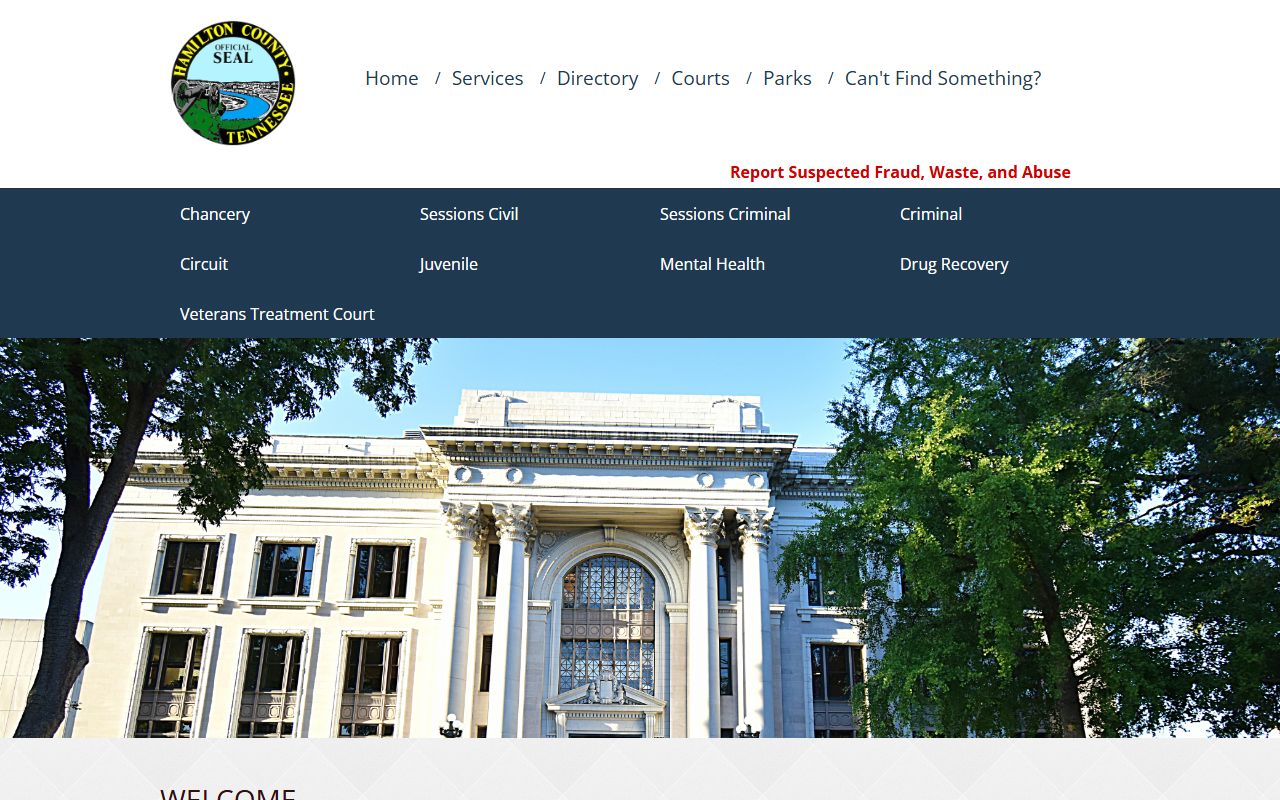
From that page you can jump straight to the docket and clerk link that fits your case, instead of guessing which court to call.
- Pick the court that matches your case type: civil, criminal, family, or probate.
- Open the portal for that court and enter a party name or a case number.
- Use a full first and last name, and add a filing year to narrow the list.
- Review the results and open the case to read its docket entries.
- Ask the matching clerk for a certified copy if you need an official record.
For civil and Sessions civil files, the Circuit Court Clerk links the public to TennesseeCaseFinder, which the county says is free and updates as soon as the clerk enters data.
You can reach that tool through the TennesseeCaseFinder portal, though the live screen may ask you to sign up or log in before a search runs.
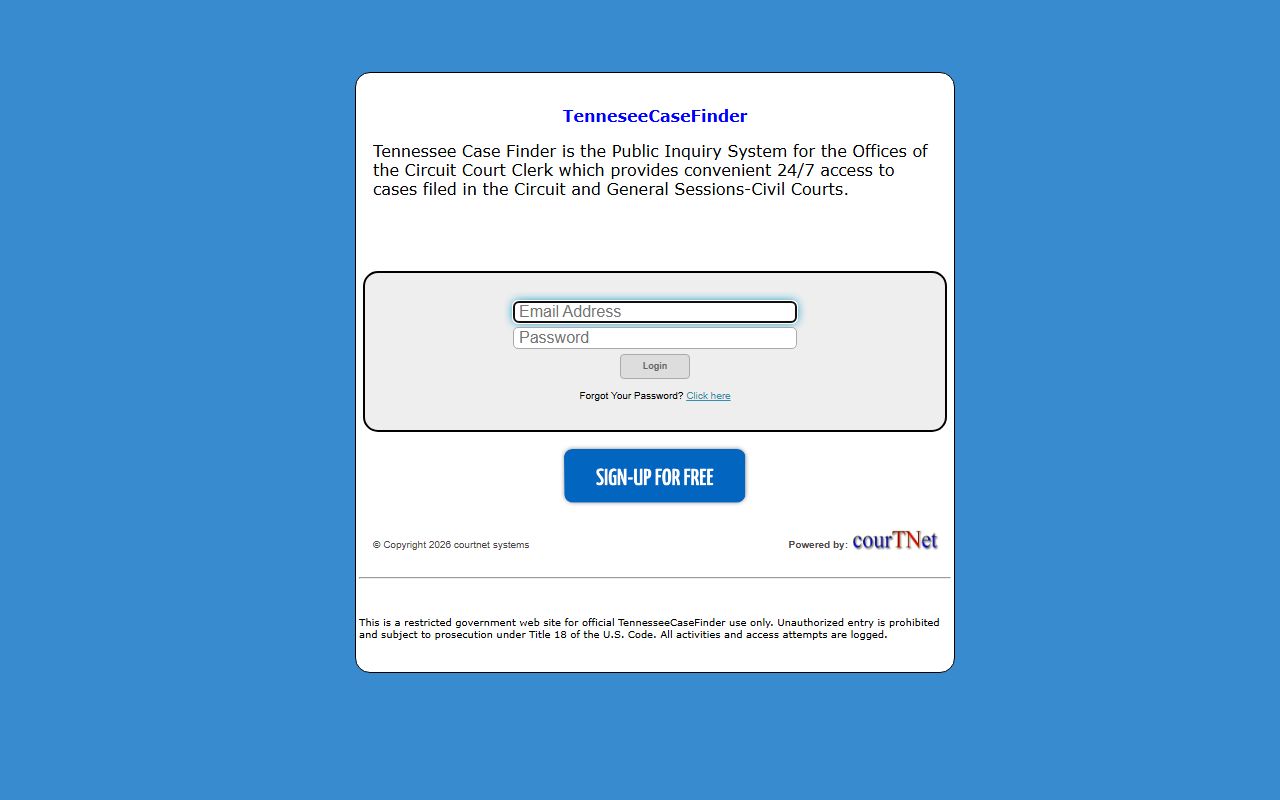
The county page describes it as free public inquiry, so check the local Circuit Court Clerk link first if the portal asks for an account.
The Hamilton County Judicial System
Tennessee splits its trial courts by case type, and Hamilton County sits in the 11th Judicial District. The state Administrative Office of the Courts says the 95 counties are grouped into judicial districts that hold Circuit Courts and Chancery Courts, with some districts adding separate Criminal Courts and Probate Courts. Hamilton County has all of these. Circuit Court is the main court of general jurisdiction. Chancery Court is the equity court. Criminal Court handles felony and serious misdemeanor cases after formal charging. General Sessions handles a high volume of limited civil and criminal work, and Juvenile Court handles minors.
Appeals follow a fixed path. Civil appeals from Hamilton County go to the Tennessee Court of Appeals. Criminal appeals go to the Tennessee Court of Criminal Appeals. The Tennessee Supreme Court is the final state review. General Sessions cases that are appealed get a fresh hearing in Circuit Court.
Case flow: General Sessions › Circuit Court › Tennessee Court of Appeals › Tennessee Supreme Court
The Criminal Court divisions publish their own resources and direct phone lines, which helps when you need a specific division clerk.
The Hamilton County Criminal Courts site lists Division I, II, and III along with court forms and recovery-court links.
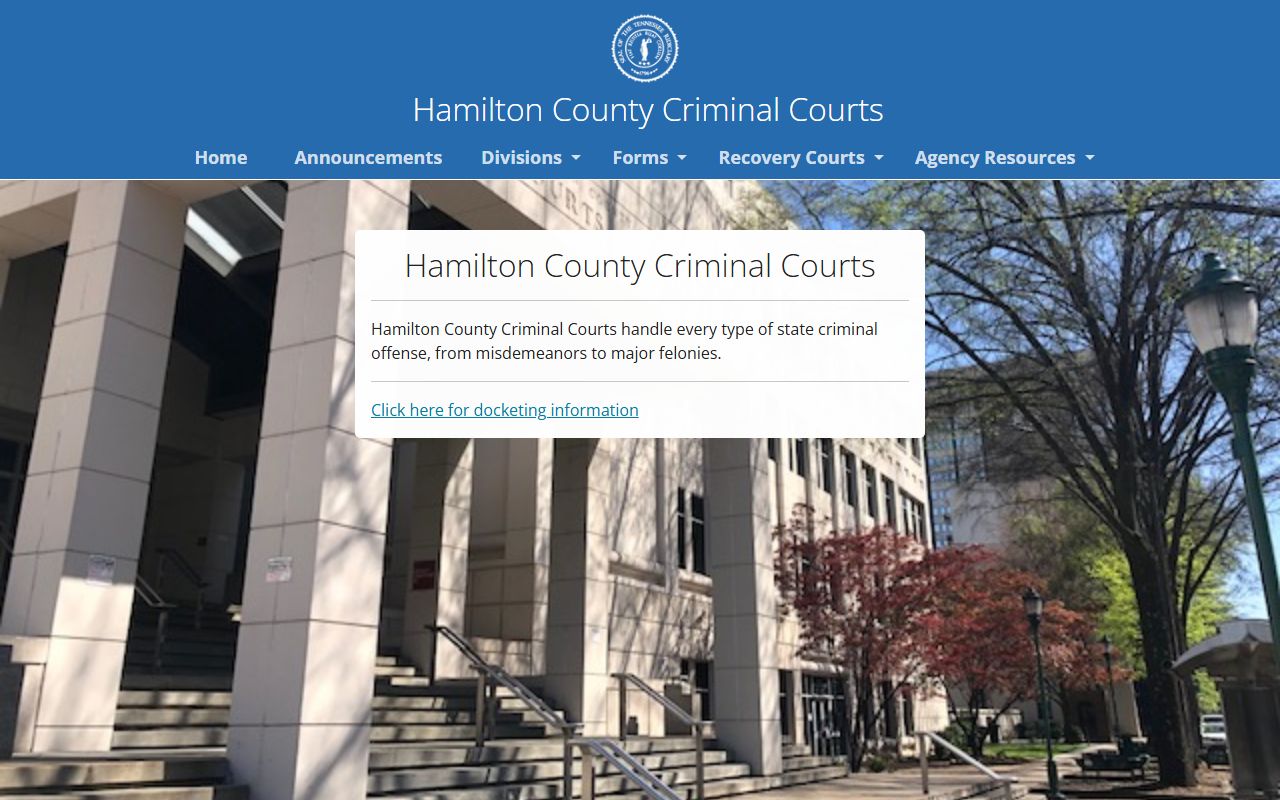
That site is the right starting point for felony case questions once the grand jury has acted.
| Court | Jurisdiction | Case Types |
|---|---|---|
| Circuit Court | General trial court | Civil torts, contracts, divorce, name changes, adoptions, lower-court appeals |
| Chancery Court | Equity and probate | Estates, trusts, guardianships, conservatorships, delinquent taxes, liens, boundary lines |
| Criminal Court | Major crimes | Felonies and misdemeanors after indictment, presentment, information, or appeal |
| General Sessions | Limited jurisdiction | Small civil claims, detainers, misdemeanors, traffic, felony preliminary hearings |
| Juvenile Court | Minors | Delinquency, dependency and neglect, custody, parentage, child support |
Which Clerk Holds Hamilton County Court Records
Hamilton County uses split clerk offices. That matters because the office that holds your record depends on the court. The Circuit Court Clerk is Larry L. Henry, and he serves as clerk for both Circuit Court and General Sessions Civil. The Criminal Court Clerk is Vince Dean, who keeps criminal and Sessions criminal files. The Clerk and Master handles Chancery Court paperwork and fees. The County Clerk, Bill Knowles, issues marriage licenses. Pick the office by case type, not by guesswork.
The Circuit Court Clerk page explains the office role and links the public search tool for civil records.
You can see those details on the Circuit Court Clerk TennesseeCaseFinder page, which lists the office address, hours, and search options.
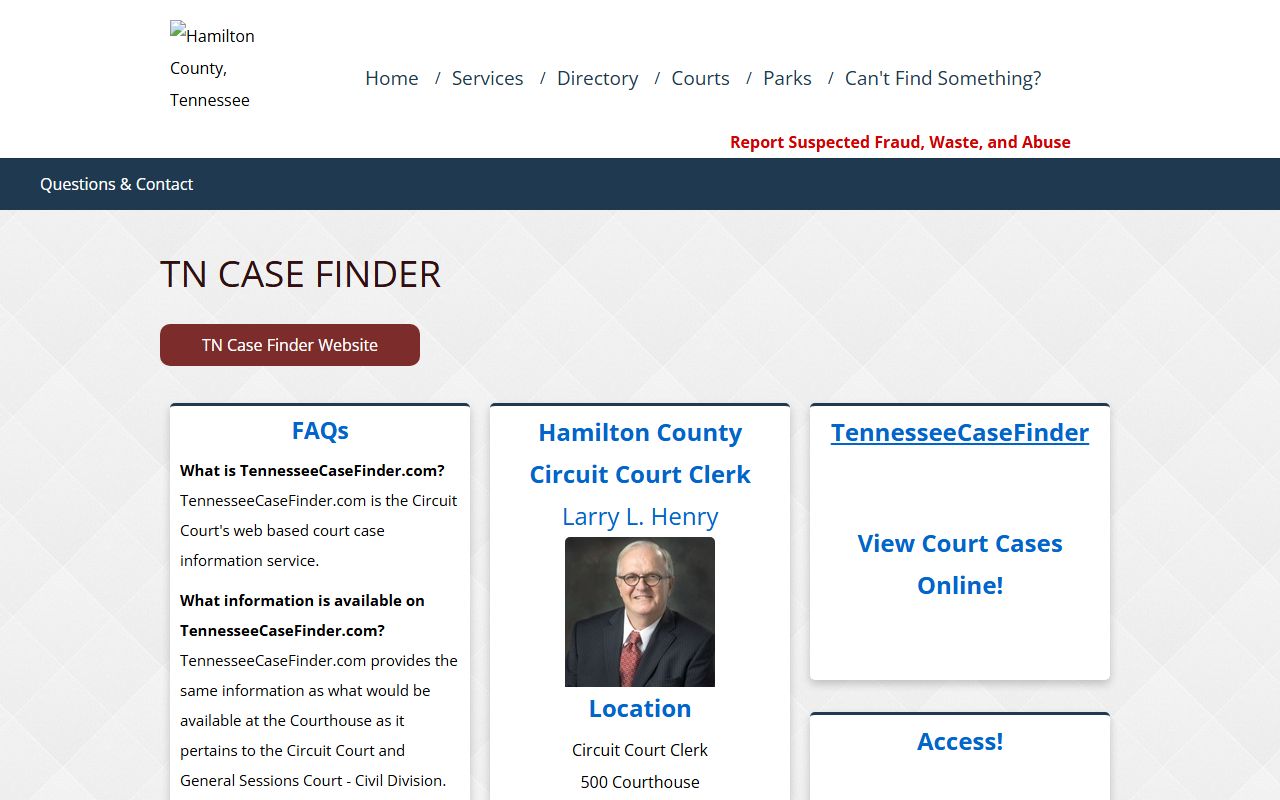
For a full breakdown of each office, see the Circuit Court Clerk and Criminal Court Clerk pages.
- Circuit Court Clerk holds civil suits, divorce, and Sessions civil files.
- Criminal Court Clerk holds felony, misdemeanor, and Sessions criminal files.
- Clerk and Master holds Chancery estates, trusts, and guardianship files.
- County Clerk holds marriage license records.
Types of Court Records Available in Hamilton County
The records you can find track the courts that make them. Civil records come from Circuit Court and General Sessions Civil and cover lawsuits, contract disputes, torts, condemnations, workers' compensation, name changes, and domestic matters. Criminal records come from Criminal Court and Sessions Criminal. Family and divorce matters can sit in Circuit Court or Chancery Court. Estate and probate files live with the Clerk and Master in Chancery. Traffic offenses run through Sessions Criminal. Juvenile records exist but are restricted under state law.
Each record type has its own access path, and certified copies always come from the clerk of the court that handled the case.
- Criminal records cover charges, dispositions, and sentences after a case is filed.
- Civil records cover suits, judgments, and General Sessions civil claims.
- Family and divorce records sit in Circuit or Chancery Court, with parenting-plan steps required.
- Probate records cover wills, estate administration, guardianships, and conservatorships.
- Traffic records come from General Sessions Criminal and city municipal courts.
For the full search walkthrough on each portal, see the Hamilton County court records page.
What Hamilton County Court Records Show
A Hamilton County case record holds the basic facts of the case. Criminal and Sessions criminal dockets show a numeric docket number, the defendant in uppercase, the charge, the court time and courtroom, the presiding judge, and the division. The Chancery search uses party name, case year, and a case number. Civil records show parties, filings, and judgments. Financial balances can appear on criminal case pages, and the county notes that payments above $5,000 cannot be made online.
The daily docket is a good example of how this data appears in public. It lists who is due in court, when, and in which room.
The daily court docket on the Court Case Display site sorts defendants, case numbers, and court times for Sessions and Criminal cases.
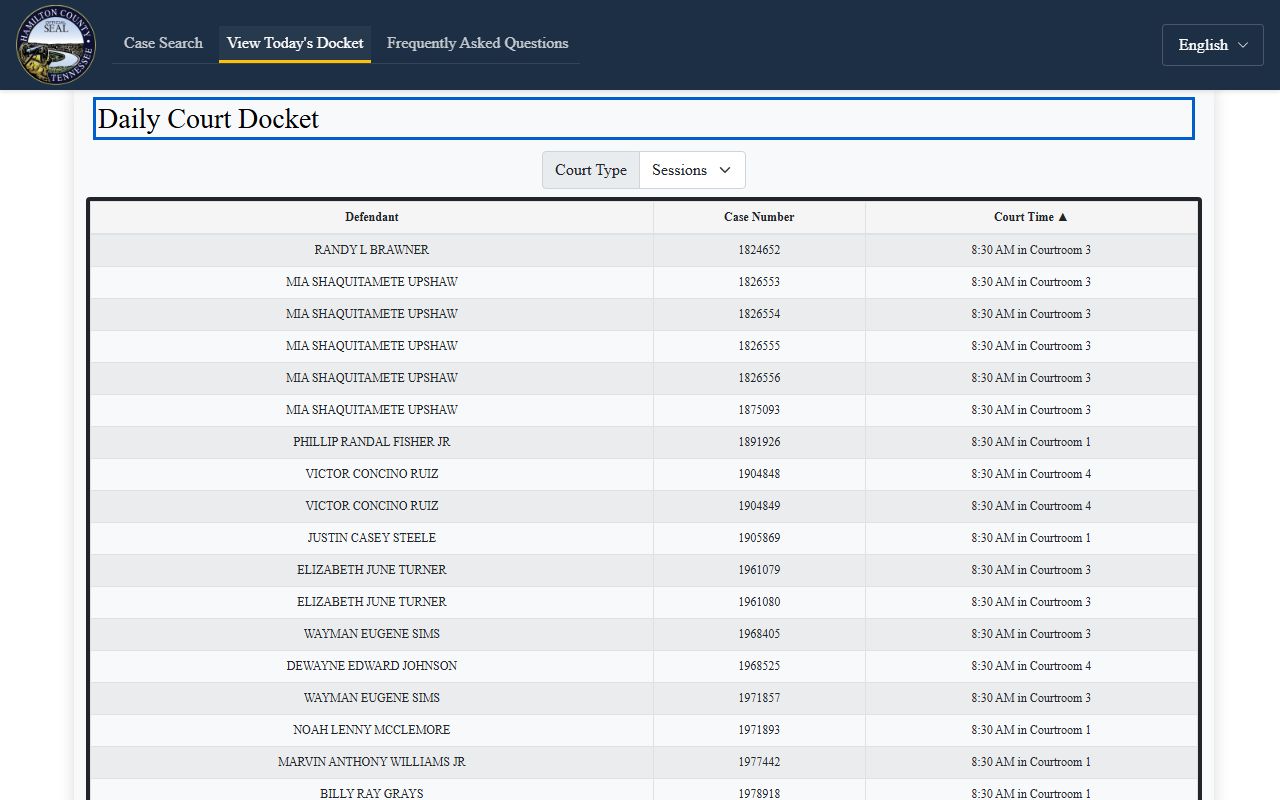
Each row points to a full case file, which you can open through the main case search.
| Field | What It Shows |
|---|---|
| Case Number | The numeric docket number assigned when the case is filed. |
| Parties | The defendant, or the named parties in a civil or Chancery case. |
| Charge or Cause | The criminal charge or the type of civil claim. |
| Court Time | The hearing time plus the courtroom, such as Courtroom 3. |
| Judge and Division | The presiding judge and the court division number. |
| Disposition | The outcome, such as a plea or judgment, when entered. |
Public Access Laws for Hamilton County Court Records
Tennessee gives citizens a broad right to inspect public records. The Tennessee Public Records Act opens state, county, and municipal records during business hours unless a law makes a record confidential. Tennessee Supreme Court Rule 34 applies that right to court records and defines them to include case records, administrative records, and judicial records. Hamilton County offices follow this through their own written public-records policies and request forms.
Access is not unlimited. Rule 34 lets courts protect drafts, deliberative notes, sealed documents, and records covered by a protective order.
Key Statutes:
Tennessee Code § 10-7-503 - public records are open to Tennessee citizens during business hours unless the law says otherwise.
Tennessee Code § 10-7-504 - lists the records that are confidential and exempt from inspection.
Tennessee Supreme Court Rule 34 - sets the right to inspect court records and the limits on that right.
Tennessee Code § 40-32-101 - covers when eligible criminal records can be expunged and removed.
See the Hamilton County public records page for how to file a formal request and what copy fees apply.
Records That Are Restricted or Confidential
Some Hamilton County records are closed by law. Juvenile files are not broadly public, and Tennessee Code § 37-1-153 governs their confidentiality. Adoption records are sealed under state adoption law. Sealed court records and protective orders stay closed under Rule 34. Mental-health and treatment records hold confidential health data even when a public docket entry exists. After an expungement order, court clerks must remove eligible public records from their electronic databases.
To view a sealed record, a person normally has to file a motion in the court that holds the file and show a legal basis for access. The court decides whether to open it.
Personal identifiers such as Social Security numbers and financial account numbers are restricted or redacted on public displays.
Specialty Courts in Hamilton County
Hamilton County runs several problem-solving courts that work alongside the regular criminal system. These programs aim to cut repeat offenses by treating the root cause of a case. The county links three: a Drug Recovery Court, a Mental Health Court, and a Veterans Treatment Court. Each serves a different group, and each keeps its own program records.
The Mental Health Court launched in 2015 as a Public Defender-led program. It connects justice-involved people who have mental-health needs to diagnosis, treatment, and support, both in custody and after release.
The Hamilton County Mental Health Court works with six community mental-health centers, the District Attorney's Office, and state probation.
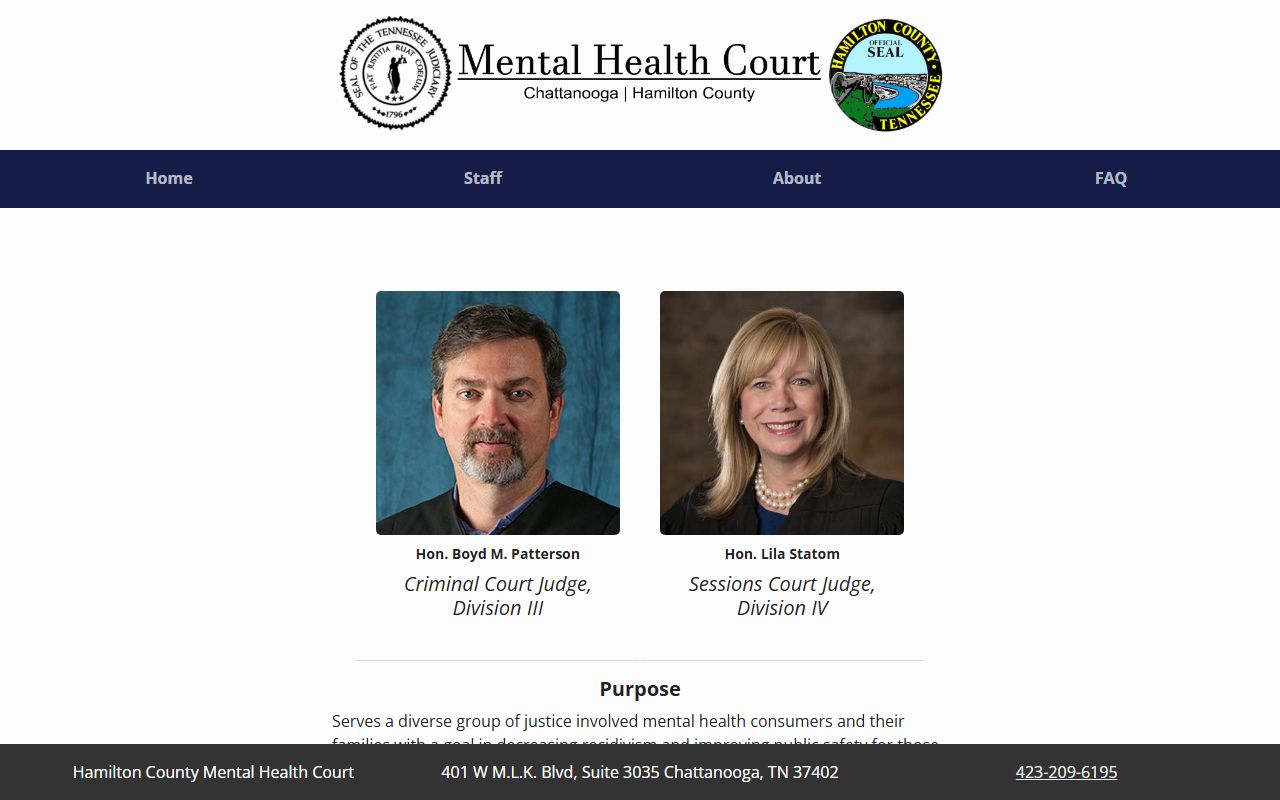
It is a model for how the county handles cases where treatment matters as much as punishment.
The Drug Recovery Court focuses on breaking the cycle of addiction. Its stated mission is to lower recidivism and improve the odds that participants succeed back in the community.
You can read about the program on the Hamilton County Drug Recovery Court site, which the county links from its main court menu.
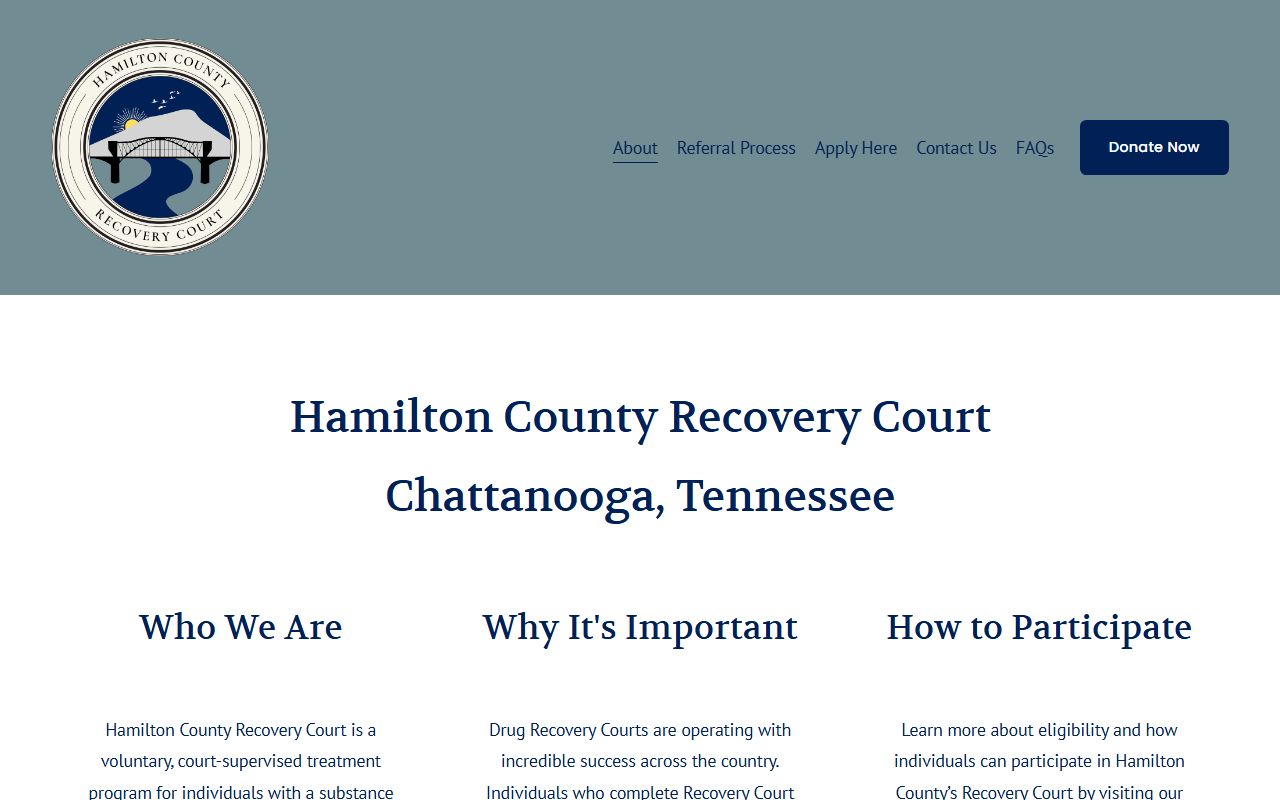
The court ties public safety to individual responsibility and family stability.
The Veterans Treatment Court serves eligible justice-involved veterans. It pairs supervision and treatment with supports built for veterans.
The Hamilton County Veterans Treatment Court is listed among the county's problem-solving courts.

These courts show how local justice has grown past the basic trial model.
Hamilton County Sheriff and Jail
The Hamilton County Sheriff's Office is led by Sheriff Austin Garrett. The office runs the Hamilton County Jail and Detention Center and posts a public inmate search. You can look up a person in custody by last name or by SPN booking number. An inmate profile can show a photo, date of birth, bond amount, judge, division, and court date. The jail also offers free online visits through a third-party provider.
The Sheriff's Office serves what it calls the fourth largest county in Tennessee, and it publishes a yearly statistical review of its work.
For the full roster details and visit rules, see Hamilton County inmate records, and check warrant records for the open warrant search updated daily at 4:00 p.m.
Marriage, Divorce, and Probate Records
The County Clerk issues marriage licenses for Hamilton County, and an online portal lets you search older licenses by name, date, or officiant. Divorce cases sit in Circuit Court or Chancery Court, depending on where the case was filed. Probate and estate work goes through the Clerk and Master in Chancery Court. Certified copies of any of these come from the clerk that holds the file.
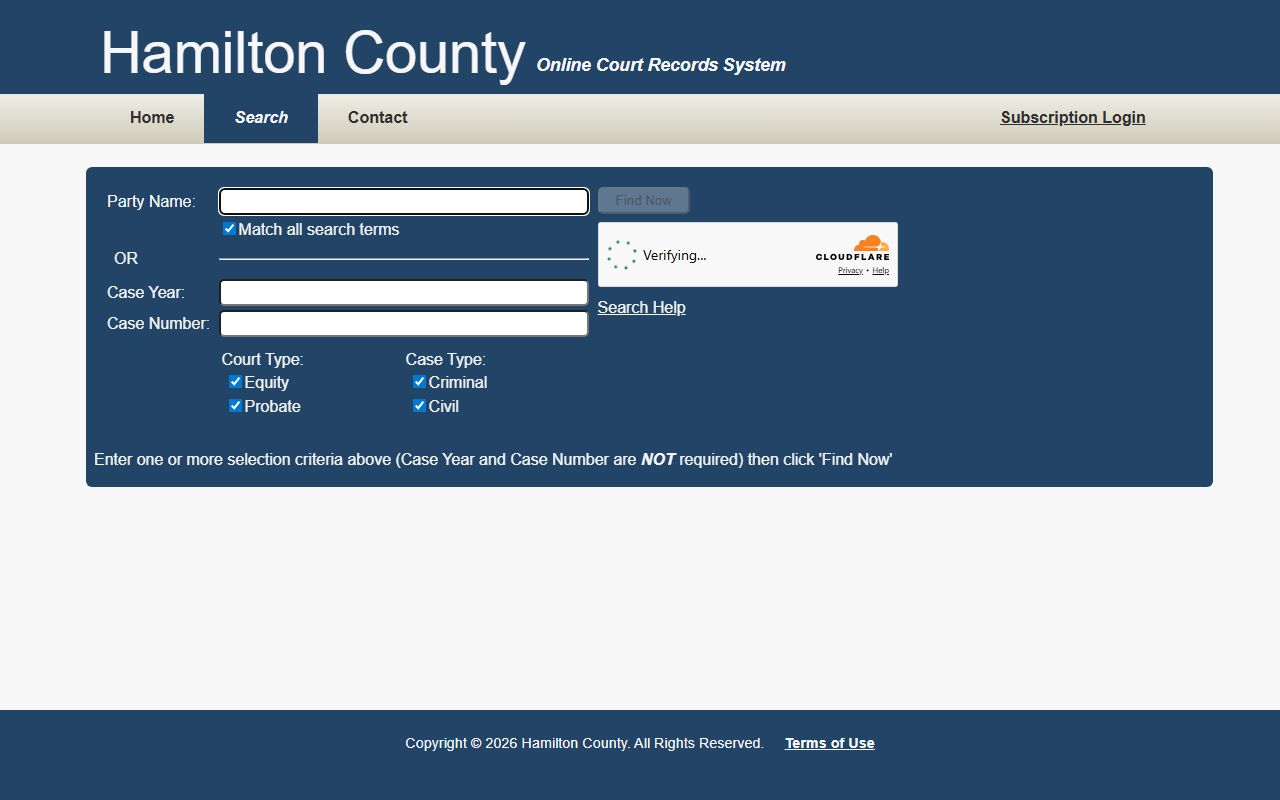
The Chancery and probate search lets you choose the court type and case type right on the search form.
You can open the Hamilton County Online Court Records System to search Chancery and probate cases by party name and case year.
See the marriage and divorce records and probate records pages for the full steps.
- Testator
- The person who made a will.
- Executor
- The person named to carry out a will.
- Conservator
- A person a court appoints to manage an adult who cannot manage their own affairs.
- Guardian
- A person given authority over a minor or a protected person.
Hamilton County Court Records Fees
Hamilton County clerks charge for searches and certified copies, but the offices do not post a single fee table for every court. The Criminal Court Clerk states that the office charges a fee to search records and to provide certified criminal documentation. The Chancery Court notes that its listed costs are estimates, not real-time figures, and asks the public to call for current amounts. The best move is to call the clerk that holds your case before you visit.
The table below shows where to confirm cost for each office, using the phone numbers the county publishes.
| Office | How to Confirm Cost |
|---|---|
| Circuit Court Clerk | Call 423-209-6700 for civil and Sessions civil fees |
| Criminal Court Clerk | Call 423-209-7500 for search and certified-copy fees |
| Clerk and Master (Chancery) | Call 423-209-6600 for current court cost |
| County Clerk (marriage) | Call 423-209-6500 for marriage license fees |
Note: The county lists costs as estimates, so confirm the exact fee with the clerk before you pay or order copies.
How to Interpret Hamilton County Court Records
Court records use shorthand that can confuse first-time readers. A charge is not a conviction. A disposition is the outcome, and it may read as blank, "Guilty - Plea," or a dismissal. A capias is an arrest process issued when someone fails to appear or obey the court. A continuance means a hearing was pushed to a later date. Nolle prosequi means the state chose not to go forward.
The criminal case display warns that its data is not official and that names can be confused, since many people share the same name. Treat an online entry as a lead, not as proof, and verify with the clerk.
The Court Case Display disclaimer spells out these limits before you search.
You can read it on the Criminal Court information disclaimer page.
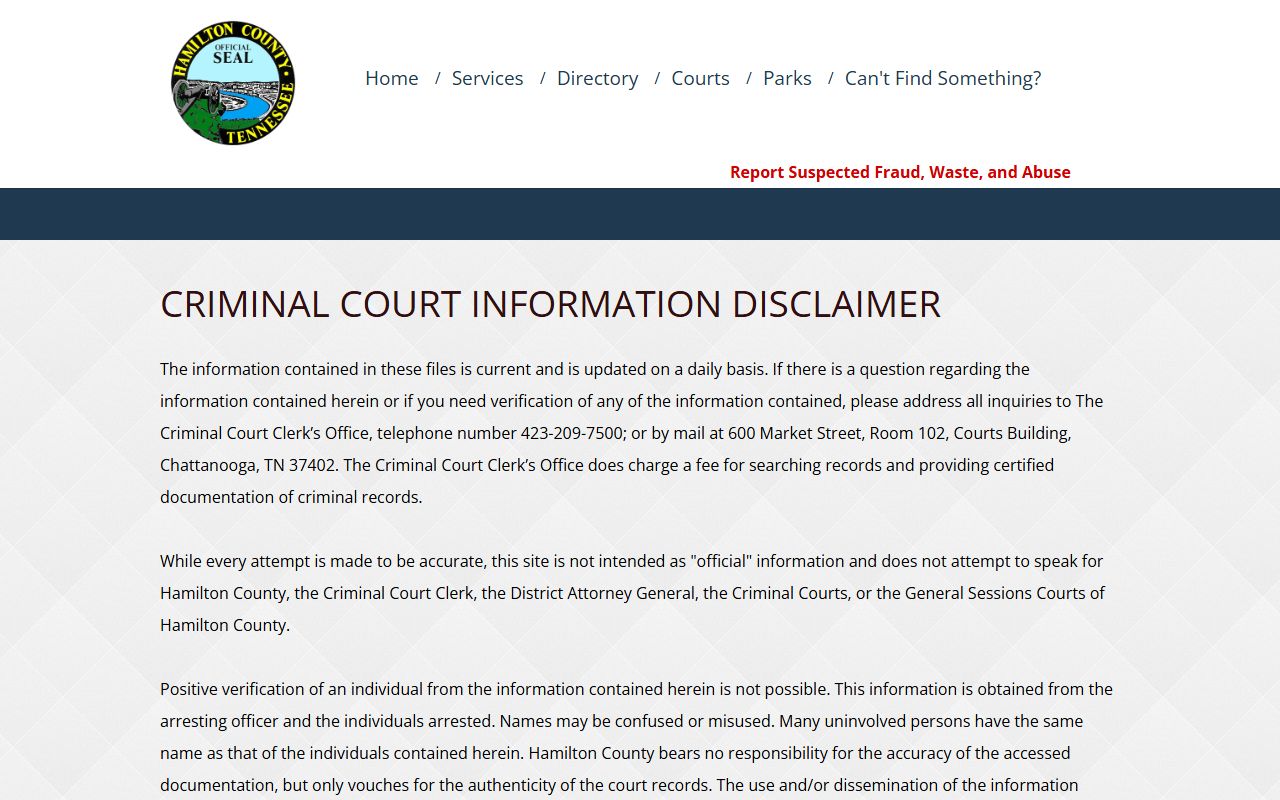
The disclaimer also explains the daily update schedule and the fee for certified records.
Accuracy and Record Limitations
Online records lag behind real events. The criminal disclaimer says files are current and updated daily, while the FAQ gives practical timing: court appearances appear within 24 hours, filings within 48 hours, and financial transactions within 72 hours. The Circuit Court Clerk page says civil data shows up as soon as the clerk enters it. The open warrant database updates once a day at 4:00 p.m.
Note: Always confirm a name, charge, or disposition with the clerk that holds the file before you rely on an online record for any decision.
Criminal and Sessions Case Lookup
Criminal and Sessions criminal cases use the Court Case Display portal. You can search by defendant name, case number, driver's license, Social Security number, or SPN. A defendant-name search asks for a last name, with first and middle name optional. The site has a Spanish language option and a separate defendant profile tab that needs a Social Security number to open.
This portal is the public face of the Criminal Court Clerk's data, and it feeds the daily docket.
You can reach it through the Hamilton County Court Case Display site for criminal and Sessions criminal cases.
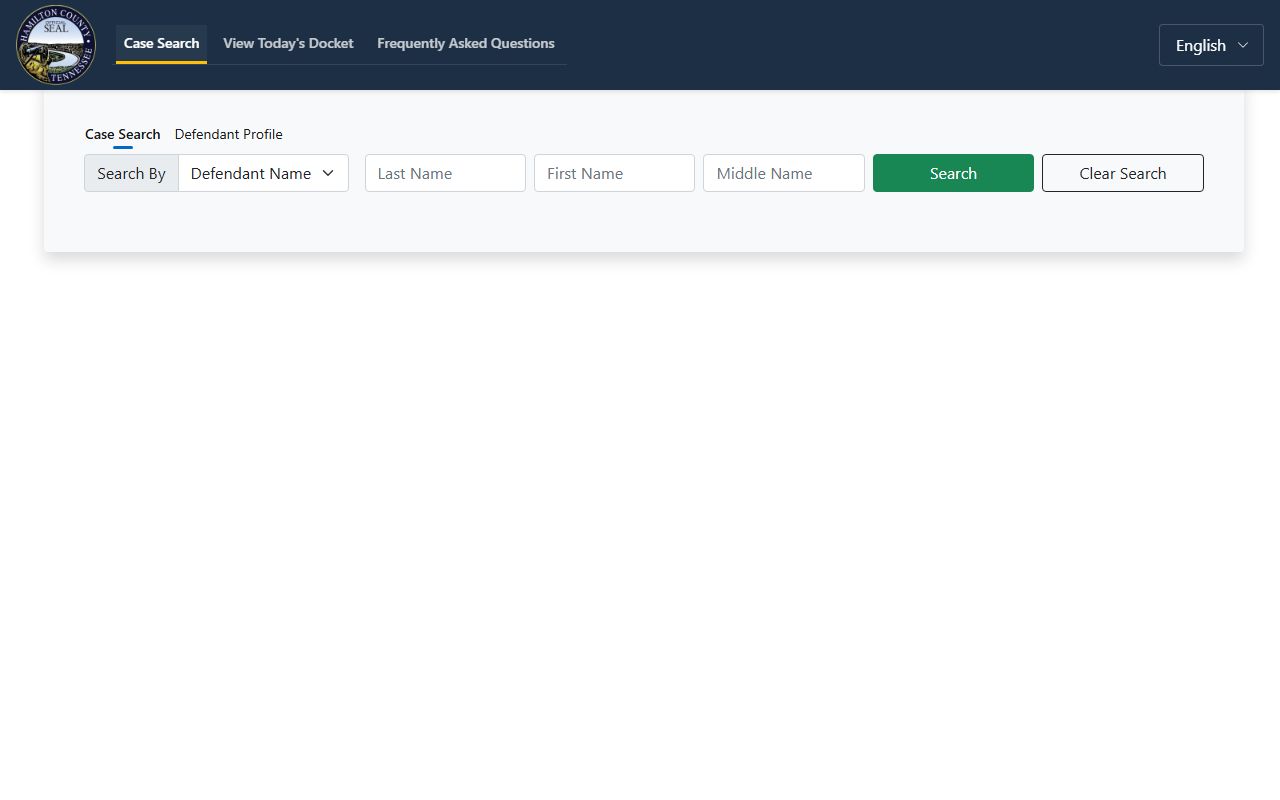
For deeper steps on charges, dispositions, and certified copies, see the arrest records page.
Chancery and Probate Records Online
Chancery and probate cases use the Hamilton County Online Court Records System. The search form lets you enter a party name or case reference, a case year, and a case number, then choose the court type and case type. The court type options are Equity and Probate. The case type options are Criminal and Civil. A full name works best with the match-all option checked.
The system caps results at 2,500 rows and considers only the first ten words of a name query. A security check must be cleared before the search runs.
You can open the Hamilton County Online Court Records System home page to begin a Chancery or probate search.
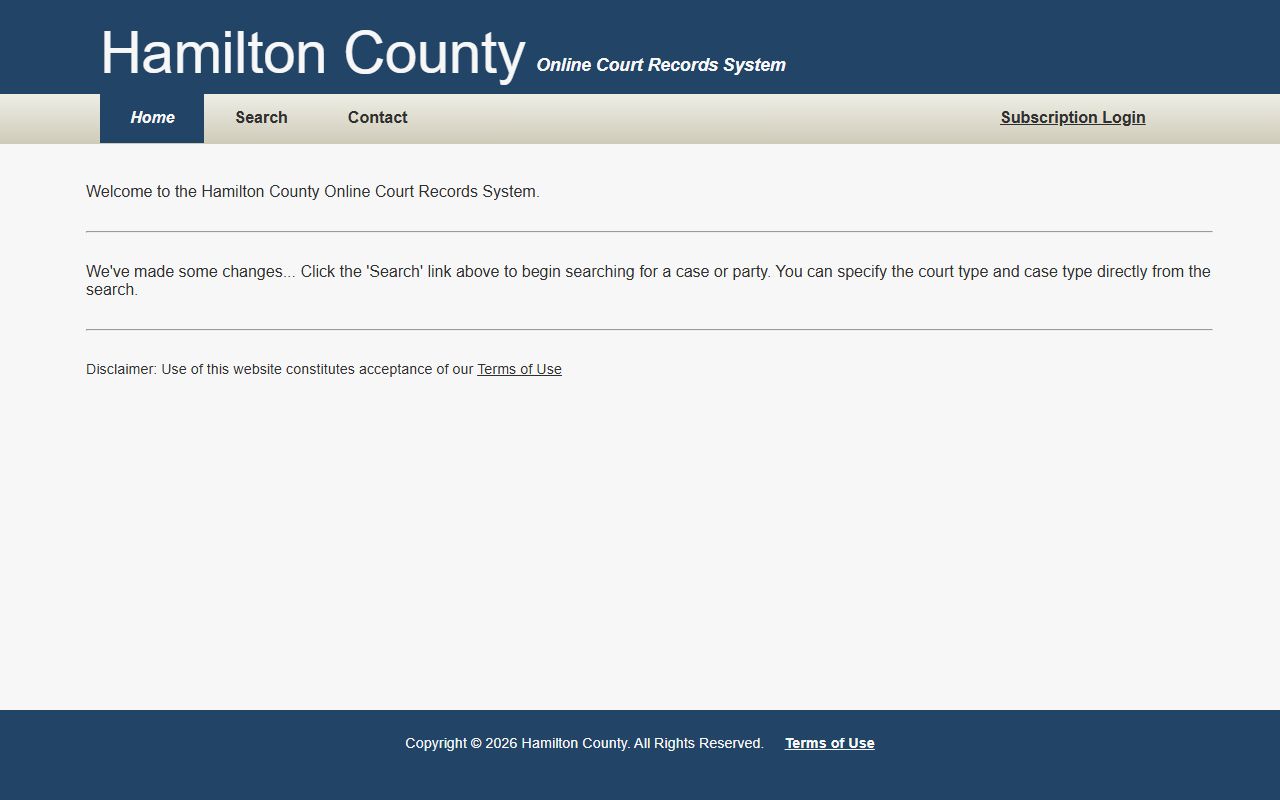
See the probate records page for the field-by-field guide and filing steps.
History of Hamilton County Courts
The local court structure reflects Tennessee's old split between Circuit and Chancery courts. The Chancery role is rooted in equity, which is why the county still lists tasks like injunctions, trusts, estates, liens, boundary lines, and election contests under that court. Circuit Court kept its broad civil and domestic reach plus appeals from lower courts. As caseloads grew, the legislature added a separate Criminal Court and built out General Sessions divisions, Juvenile Court, and the modern specialty courts. The Mental Health Court, launched in 2015, is one of the newer reforms in this long line.
Frequently Asked Questions
How do I search Hamilton County court records?
Use the portal that matches the case type. Circuit and General Sessions civil records link through TennesseeCaseFinder. Chancery and probate records use the Hamilton County Online Court Records System. Criminal and Sessions criminal matters use the Court Case Display site after you accept the disclaimer. If you need certified documentation, contact the clerk that holds the file.
Why can't I find my criminal case online?
The Court Case Display FAQ says a case may not show because it is sealed or confidential, too recent, searched with the wrong details, or from another jurisdiction. Allow 24 to 48 hours for recent cases to process. The public display is not official, and similar names can be confused, so verify with the clerk.
Can I pay fines or court costs online?
Yes, in most cases. Find the case on the criminal portal, open it, and select Pay Now. The county also takes Sessions and Criminal payments by phone. Payments over $5,000 cannot be made online, and a payment can take 3 to 5 business days to appear.
The full Court Case Display FAQ answers many more questions about searching, payments, and missing cases.
You can read it on the Court Case Display FAQ page.
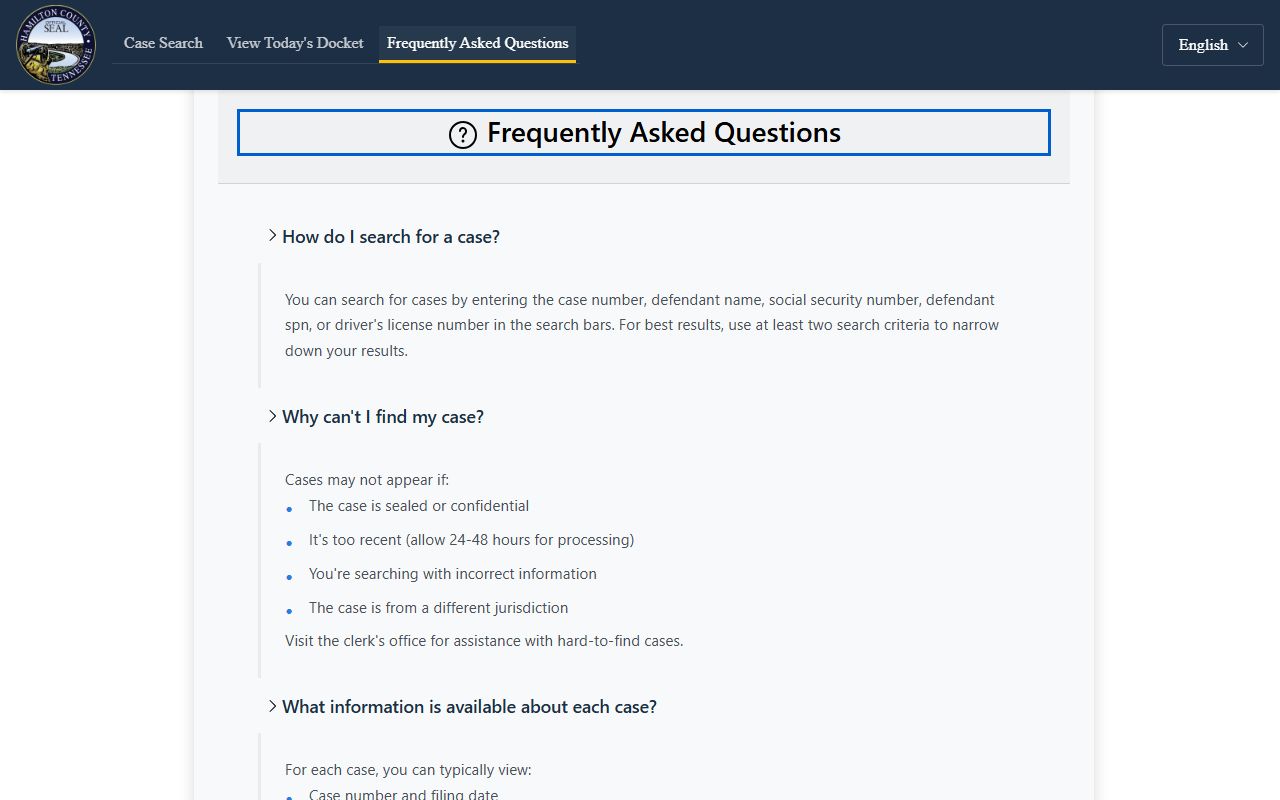
More answers are on the Hamilton County Court Records FAQ page.