
Hamilton County Public Records Law
Tennessee opens its government records by default. The Tennessee Public Records Act gives citizens a right to inspect state, county, and municipal records during business hours, unless a law makes a record confidential. That right sits in Tennessee Code section 10-7-503, the part of the act that defines public records broadly and keeps them open. The same act lists the exceptions in section 10-7-504, which is where confidential records are carved out.
Court records get a second layer. Tennessee Supreme Court Rule 34 applies the open-records idea to the courts and sorts court records into case records, administrative records, and judicial records. It says the public can inspect court records unless a record is excepted under the public-records act, otherwise barred by law, or protected by a court rule or order. You can read the rule itself on the Tennessee Supreme Court Rule 34 page, which governs public access to court records.
Hamilton County offices put these rules into practice through their own written public-records policies and request forms. The Clerk and Master, County Clerk, Register, and Sheriff's Office each publish a policy. The policies follow the same state framework but differ in the form you use and the fee you pay.
For court files in particular, see the broader Hamilton County court records hub. For criminal files, the arrest records page covers the public criminal display.
How to File a Hamilton County Public Records Request
Filing a request is mostly about aiming it at the right office and describing the record well. There is no single county-wide window; each office takes its own requests. The steps below give a reliable path that works across the county offices.
- Identify which office holds the record you want, since court and agency files live in different places.
- Get that office's public-records request form or policy, such as the Clerk and Master or Sheriff's Office form.
- Describe the record in enough detail for the office to find it, including names, dates, and case or document numbers.
- Certify any required information, such as Tennessee citizenship on the Sheriff's Office form.
- Submit the request to the office and ask about the copy fee and the response time.
- Pick up or receive the records, and follow up in writing if a request is delayed or denied.
The detail rule is the one people miss. A request under the public-records act must be specific enough for the office to identify the responsive records. A vague ask slows everything down, and an office can ask you to narrow it. Names, a date range, and a case or instrument number make a request easy to fill.
Some offices add a citizenship step. The Sheriff's Office open-records form asks the requester to certify that they are a Tennessee citizen and that the information given is true and correct. That certification is part of the form, not an extra hurdle.
Which Hamilton County Office Holds Which Records
The biggest time-saver is sending the request to the right desk. Court records split among several clerks, and agency records sit with the agency that made them. The table below maps the main county offices to the records they hold and the phone number to reach them.
| Office | Records Held | Phone |
|---|---|---|
| Circuit Court Clerk | Civil and General Sessions Civil case files | 423-209-6700 |
| Criminal Court Clerk | Criminal case files and certified criminal documents | 423-209-7500 |
| Clerk and Master | Chancery, equity, and probate files | 423-209-6600 |
| County Clerk | Marriage licenses and county clerk records | 423-209-6500 / 6600 |
| Hamilton County Sheriff's Office | Law enforcement and corrections records | 423-209-7000 |
Use the table as a routing guide. A divorce decree comes from the Circuit Court Clerk or the Clerk and Master, depending on which court heard it. An arrest report comes from the Sheriff's Office. A marriage license comes from the County Clerk. Sending the request to the wrong office only adds a hand-off.
For office-level detail, the Circuit Court Clerk and Criminal Court Clerk pages cover hours, addresses, and the records each one keeps.
Response Times and Copy Fees
Open records are free to inspect during business hours, but copies cost money. Tennessee lets offices charge a reasonable copy cost, and each county office sets its own amount under its policy. The Register's public-records policy, for example, lays out request rules and fees in writing. So the fee depends on the office and the number of pages.
The official pages reviewed for this section do not publish a single fixed fee table for every office. That means the safe step is to confirm the copy cost with the office before you commit to a large request. A short call avoids a surprise when you pick up the records. It helps to ask about the per-page copy fee, any staff-time charge, the accepted payment methods, and the expected response time, all up front.
Response time also varies by office and by the size of the request. A simple, well-described request for a single file moves fast. A broad request that covers many years or many records takes longer, and the office may ask you to narrow it.
Note: Hamilton County offices may charge a reasonable copy fee that differs by office, so confirm the per-page cost before you submit a large public records request.
Confidential and Restricted Records
Open by default does not mean open without limit. Tennessee Code section 10-7-504 holds the confidential exceptions, and other laws and court rules add more. When an office denies inspection because a record is confidential, this is usually the part of the law it points to.
Several categories stay closed. Juvenile court files are confidential under state law. Adoption records are sealed. Rule 34 keeps sealed documents, protective-order material, and a judge's deliberative notes out of public view. After an expungement, the clerk must remove the eligible public records from electronic databases. Personal identifiers, such as Social Security and account numbers, are redacted on public displays.
A denial is not always the end. If an office withholds a record, you can ask which exception applies and whether part of the record can be released with the confidential parts redacted. For a sealed court file, access usually requires a motion in the court that holds it, with a legal reason for the request.
Important: Do not assume a missing online record was destroyed; it may be sealed, confidential, or simply held by an office that has not posted it to a public portal.
County Office Open-Records Policies
Each county office writes its own public-records policy and request form under the state act. The forms differ, but they share the same goal: a request specific enough to find the record, plus any required certification. Two of the most-used are the Clerk and Master Open Records Request and the Sheriff's Office Tennessee Open Records Request form.
The Sheriff's Office runs its own open-records process for law enforcement and corrections records. Its request form asks the requester to certify Tennessee citizenship and the truth of the information given. You can see the agency that handles those requests on the Hamilton County Sheriff's Office home page, which lists the office's contact details.

From the Sheriff's Office home page you can reach the inmate search, the warrant search, and the open-records form, all of which fall under the same agency policy.
The Sheriff's Office also keeps its operational policies in a public repository, which sits behind much of how it handles records and requests. You can browse the Hamilton County Sheriff's Office policy repository to see the published procedures the agency follows.
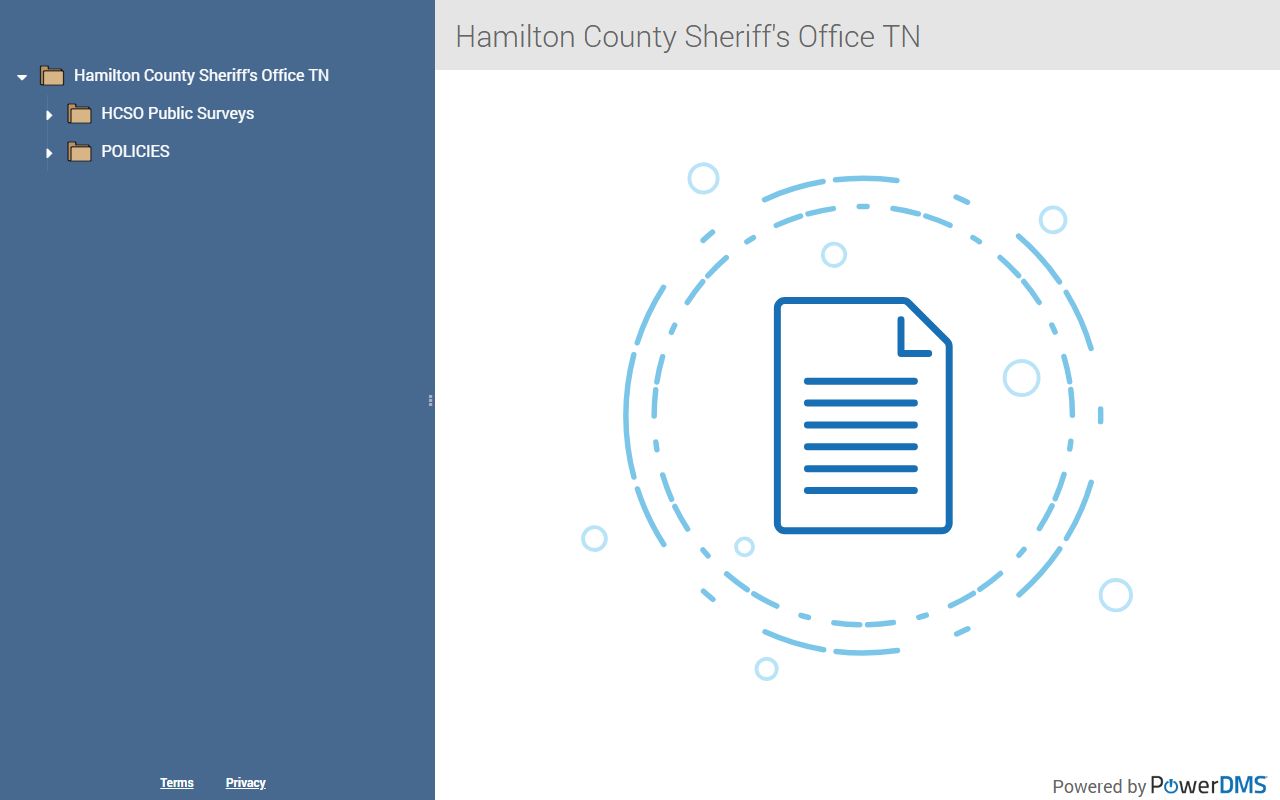
The repository is useful when you want to understand the rule behind a records decision rather than just the record itself. The County Clerk and the Register publish their own policies the same way, each with its own request steps and fees.
Federal and Historical Records for Hamilton County
Not every public record about Hamilton County sits in a county office. Some matters are federal, and some are old enough to live in the state archives. Both are part of the wider public-records picture, and both use their own systems rather than the county forms.
Federal civil and criminal matters tied to the Chattanooga area run through the federal courts, not the county clerks. Bankruptcy is one common example. You can reach the U.S. Bankruptcy Court for the Eastern District of Tennessee for federal bankruptcy filings that involve county residents and businesses.
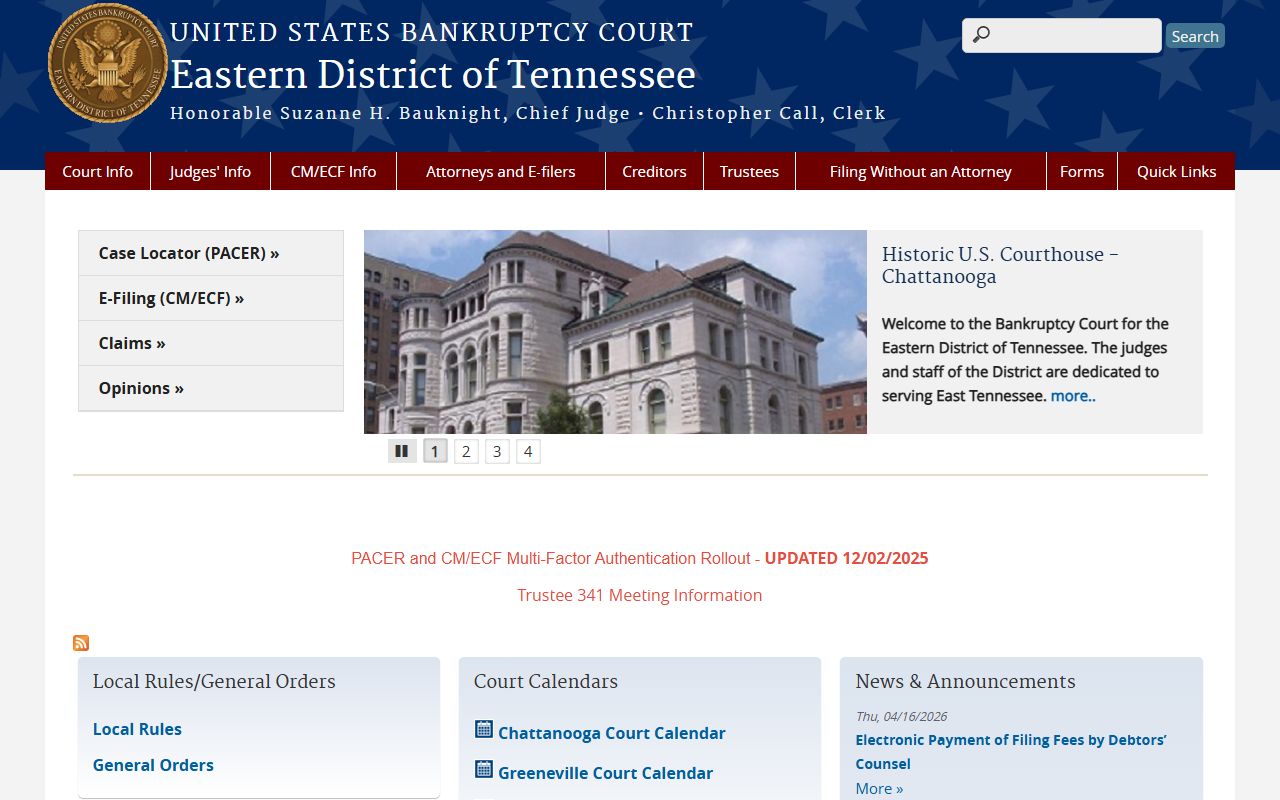
Federal bankruptcy records are separate from any county debt or lien file, so a full picture sometimes needs both the federal and the county source.
Appeals from the federal district court go higher still. The U.S. Court of Appeals for the Sixth Circuit hears appeals from the Eastern District of Tennessee, including cases that began in the Chattanooga area.
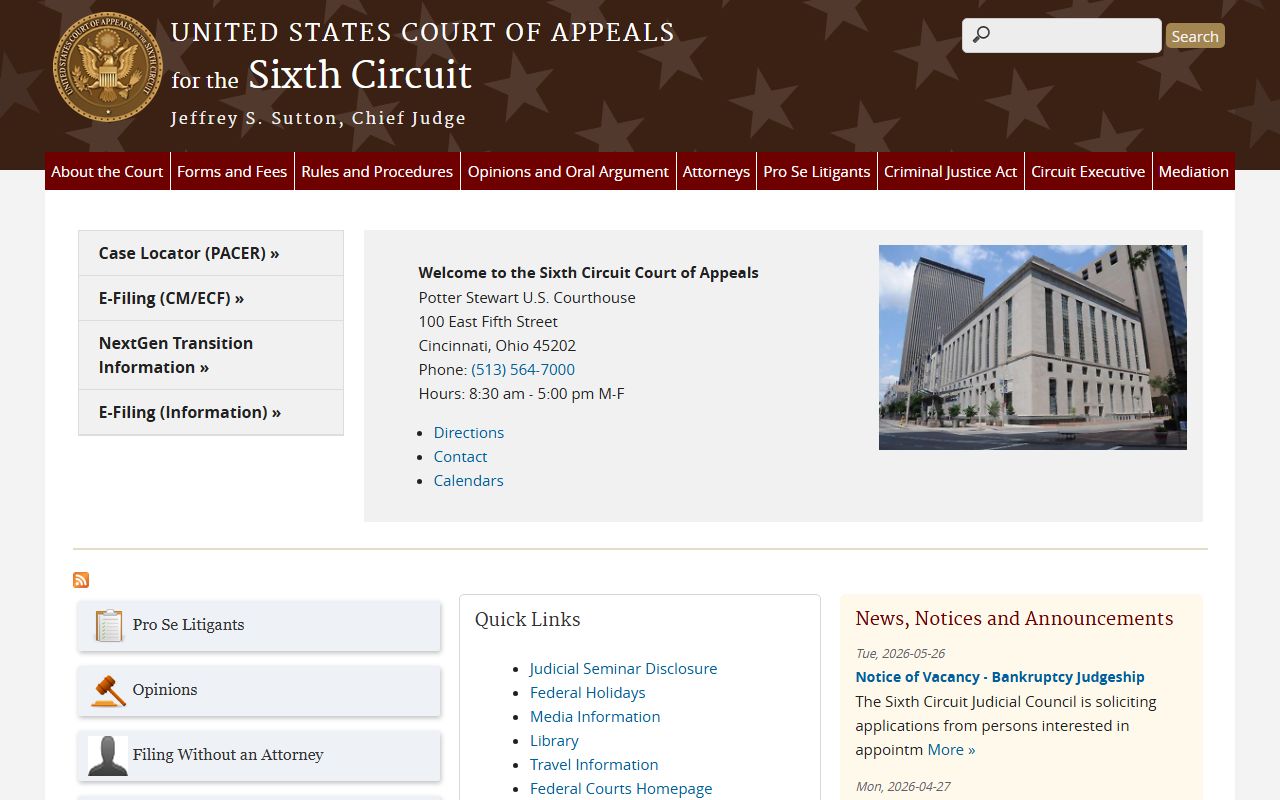
Appellate records show how a case was reviewed after the trial court, which can matter when you trace the full history of a federal matter.
For older county records, the state archives is the place to look. The Tennessee State Library and Archives court records FAQ explains how to find historical circuit, chancery, and county court minutes and how to order a search.
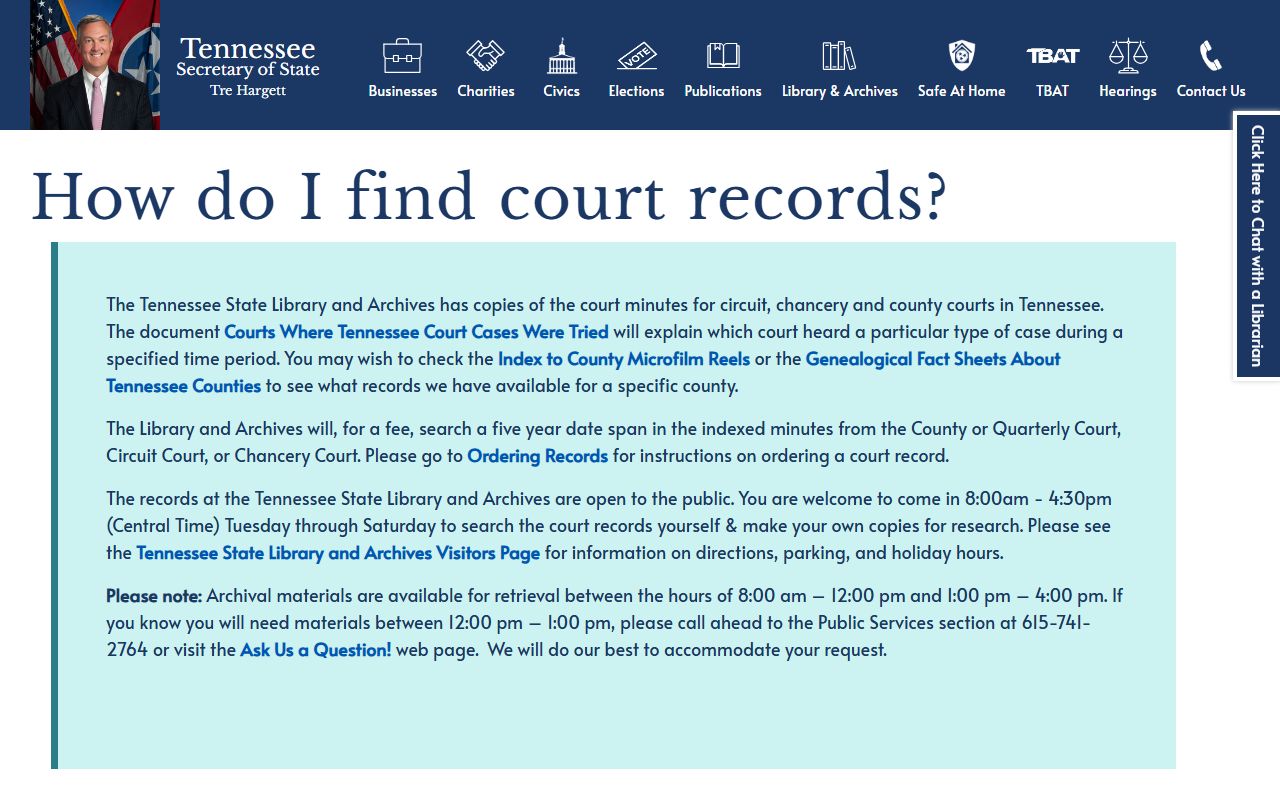
Archived minutes can reach back well before the online portals existed, so the state archives fills the gap for genealogy and very old case research.