
How to Find Recently Released Hamilton County Inmates
The Hamilton County Sheriff's Office runs a current inmate roster, not a released-inmate list. So the first move is to search the live roster by last name or SPN number. If the person no longer appears, that hints at a release. It does not confirm one. A record can drop for a transfer, a court move, or a data update, so absence is a clue and not an answer.
Treat the roster as step one in a short workflow. After the roster, you layer on alerts, state and federal searches, and a phone call to lock down the facts. The steps below put that workflow in order.
- Search the HCSO current inmate roster by last name or SPN.
- If the person is not found, call the jail at 423-209-7125 to confirm.
- Register on VINELink for a custody-change alert.
- Search TDOC for a sentenced state prisoner.
- Search the federal BOP locator for a federal inmate.
- Check the Tennessee Sex Offender Registry if registration applies.
Run the inmate records roster search first so you know whether the person is still in local custody.
Setting Up Hamilton County Release Notifications
VINELink is the official way to learn when an inmate's custody status changes. Hamilton County links VINE from its inmate profiles and court pages. You register a phone, email, or app, then VINE alerts you when the person is released, moved, or has a court event. For a release question, this beats checking a roster over and over. The alert reaches you the moment the status flips.
You can register by phone at 1-866-277-7477 or through the state portal online. The table below lists the fields VINELink uses so you know what the signup asks for.
| Field Label | Type | Required | Notes / Format |
|---|---|---|---|
| State | Dropdown / map | Yes | Tennessee is selected through the state portal link |
| Name / ID | Text | Unspecified | Search the offender or case, depending on the product flow |
| Notification registration | Account / contact fields | Conditional | A phone, email, or app setup is needed to get alerts |
The Tennessee VINELink portal is where you search a person and turn on release alerts.
Open the Tennessee VINELink notification portal to register for a custody-change alert.
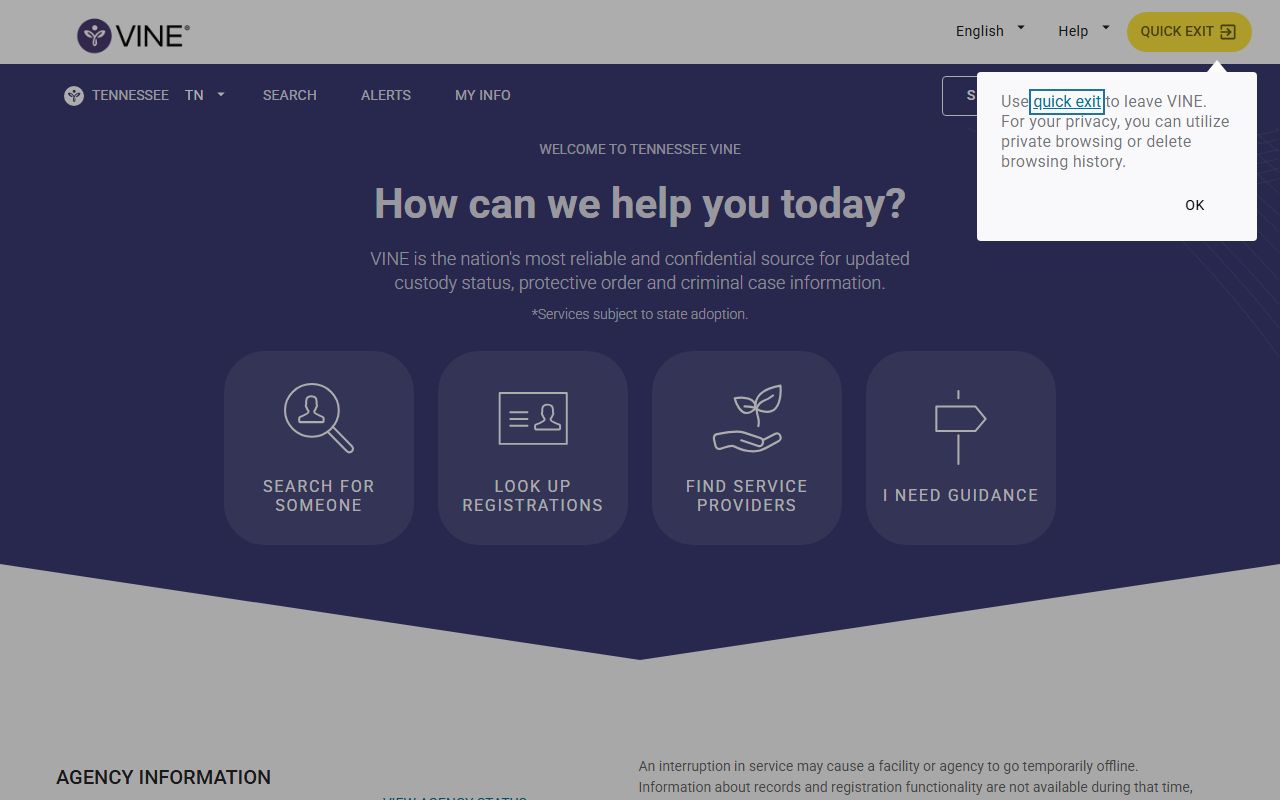
VINE notifications follow the person, so an alert still reaches you after a move from the county jail to a state facility.
Searching State and Federal Released Inmates
Not every Hamilton County case ends at the county jail. A person sentenced on a felony may go to state prison under the Tennessee Department of Correction. A federal charge sends a person into the federal system. Each layer has its own locator, and each answers whether a person is in custody or released at that level. So a thorough release search checks more than one database.
The TDOC felony offender lookup, known as FOIL, covers sentenced state prisoners. It accepts a name or a known TDOC ID. The fields are short.
| Field Label | Type | Required | Notes / Format |
|---|---|---|---|
| Name | Text | Optional | Searches the state felony offender records |
| TDOC ID | Text | Optional | A known offender ID narrows the result fast |
| Search / Submit | Button | n/a | Runs the query against state records |
You can run a state search through the TDOC felony offender information lookup, which is separate from the county jail roster.
The federal Bureau of Prisons runs its own inmate locator for federal custody and release status. It offers an ID search and a name search with extra filters.
| Field Label | Type | Required | Notes / Format |
|---|---|---|---|
| Register Number | Text | Optional | BOP, DCDC, FBI, or INS number for an ID search |
| First Name | Text | Optional | Part of a name search |
| Middle Name | Text | Optional | Narrows a name search |
| Last Name | Text | Optional | Part of a name search |
| Race | Dropdown | Optional | Narrows the results |
| Age | Text | Optional | Narrows the results |
| Sex | Dropdown | Optional | Narrows the results |
The federal locator lets you check a name or register number for federal release status.
Search the Federal Bureau of Prisons inmate locator when a Hamilton County matter became a federal case.
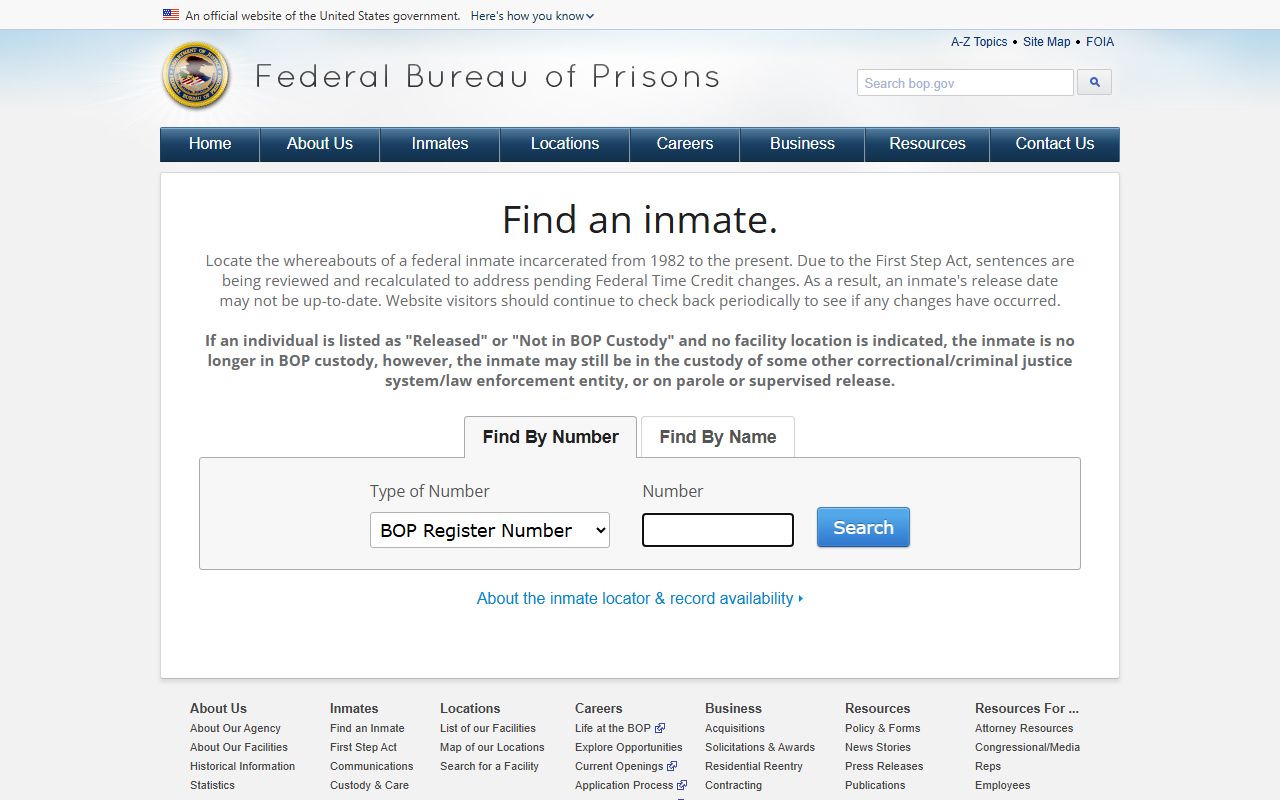
If the person shows in TDOC or BOP custody, they were not released at all; they moved up the system.
Verifying Release in Person or By Phone
Online tools lag the jail floor, so a phone call settles a close case. The jail can confirm whether a person is still held, has bonded out, or has been released. The Sheriff's main line handles wider questions and can route a call. Have the full name and a date of birth ready, and the SPN booking number if you have it.
The contact cards below give the two numbers that matter for a release check.
Hamilton County Jail and Detention Center
601 Justice Way
Chattanooga, TN 37421
423-209-7125
HCSO Administrative Headquarters
600 Market Street
Chattanooga, TN 37402
423-209-7000
Because the roster updates on its own schedule, a call is the surest way to confirm a same-day release. You can also reach the office through the Hamilton County Sheriff's Office homepage.
Note: Absence from the current roster is not proof of release, so confirm a Hamilton County inmate release by phone before you act on it.
The Tennessee Sex Offender Registry
Some people who leave custody must register as sex offenders. The Tennessee Bureau of Investigation runs the state registry, and HCSO links it from the inmate search page. The registry lets the public search for registered offenders by name and area. For a person released after a qualifying offense, the registry is a public source that the jail roster does not replace.
The registry is a search tool, not a release log. It shows current registration status, not the date someone left a jail or prison. Still, it can confirm that a released person is on the list and where they are registered.
The state registry search page hosts the public lookup for registered offenders in Tennessee.
You can open the Tennessee Sex Offender Registry search to look up a registered person.
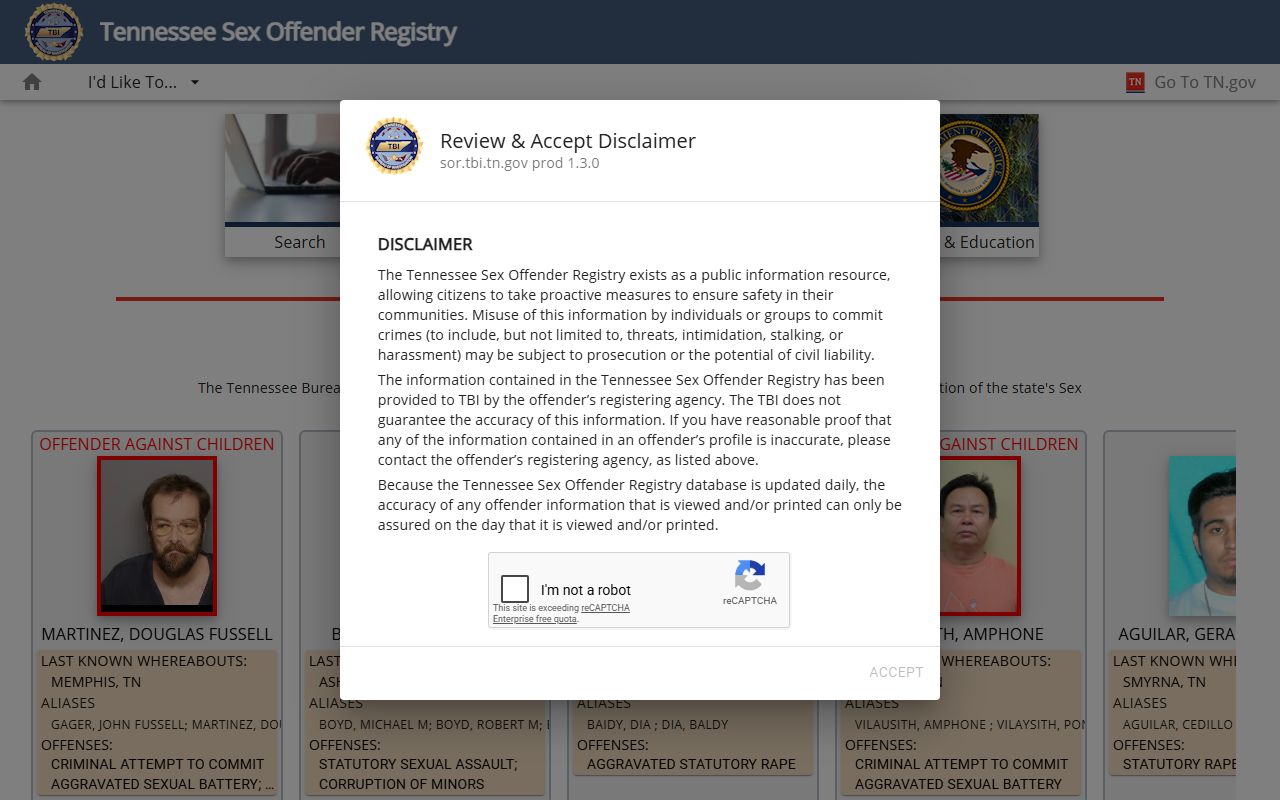
Pair a registry result with VINE or a jail call when you need to confirm a recent release.
Parole and Probation Information
A release does not always mean a clean break from supervision. Many people leave custody on parole or probation, with rules they must follow. Parole applies to sentenced prisoners released early under supervision. Probation can stand in place of jail time or follow a short term. Both put a person under a supervising officer.
For a sentenced state prisoner, the Tennessee Department of Correction tracks custody and supervision status. The TDOC felony offender lookup shows whether a person is in prison, on parole, or otherwise under state supervision. Local mental health and recovery court tracks add another layer of supervision for some Hamilton County defendants.
If supervision status matters, check TDOC first, then confirm with the supervising office. A VINE alert can also flag a custody change tied to a violation. A violation can land a person back in the county jail, so the live roster on the inmate records page is worth a second check when an alert fires.
Reentry and Expungement Resources in Hamilton County
People leaving custody in Hamilton County often need help with records, jobs, and a fresh legal start. Expungement is a court-ordered process that can erase eligible cases in the eyes of the law. It is not automatic. A person files in the court where the matter began, and free expungement may apply to dismissed cases, a no true bill, a not guilty verdict, or a nolle prosequi.
Once a local court completes an expungement, the order travels to the arresting agency, the county jail, TDOC, and the TBI. That chain matters, because an old record can linger in more than one database until each agency clears it. Diversion and conviction cases may carry extra steps and fees.
The state courts office explains the process and who qualifies.
You can read the rules on the Tennessee expungement information page before filing in the local court.
Common reasons a court denies an expungement include an ineligible conviction, unpaid costs or restitution, too short a waiting period, a prior disqualifying conviction, or a filing made in the wrong court. Knowing those traps up front saves a wasted trip. A person who is unsure should ask the clerk of the court that handled the case which path fits.
Local help exists for people who cannot afford a lawyer. Legal Aid of East Tennessee serves low-income residents in the Chattanooga area, and the Chattanooga Bar Association runs a lawyer referral service. For a criminal case, the District Public Defender for the 11th Judicial District represents people who qualify as indigent. These offices can point a person toward expungement clinics and reentry support that the jail roster and court portals do not list.
For charge and case history while you prepare a filing, check arrest records and the related warrant records search.
Civil Rights and Record Relief After Release
A finished sentence can still leave limits on a person's record and rights. Tennessee ties some rights restoration and record relief to the type of case and its outcome. Expungement under state law can remove eligible records, but conviction cases face stricter rules than dismissed ones. The path runs through the court that handled the case.
The TBI explains how an expungement order reaches each agency after a local court grants it. That helps a released person make sure the jail, the state, and the bureau all update the same way. When a record still shows after relief, the agency-notification chain is the place to start.
Keep proof of any order, payment, or disposition until every agency updates its files. For the underlying case data, the court records portals hold the official filings.